Study Abroad CRM Alternative for Boutique Agencies
Enterprise study abroad CRMs are built for high-volume networks. For a 1–15 counsellor agency, a leaner alternative may fit better.
If you run a boutique study abroad agency — somewhere between one and fifteen counsellors — most of the CRMs you find were built for a different kind of business. Large study abroad CRM platforms are designed for high-volume recruiters and sprawling sub-agent networks. For a small team, that often means paying for modules you never open and spending weeks on a setup you did not need.
This guide covers when an enterprise study abroad CRM is overkill, what a leaner alternative should actually do for a 1–15 counsellor agency, and how to decide which one fits. The short version: if your agency lives by student outcomes and the commission you are owed — not by the size of your agent network — a focused tool usually beats a heavy platform.
What is a study abroad CRM alternative for boutique agencies?
A boutique alternative is a CRM built for a small team that manages students directly, rather than for an enterprise running a large recruitment network. It keeps the core jobs — student pipeline, documents, visas, and commission — in one place, and leaves out the procurement, multi-branch, and heavy configuration layers that high-volume platforms add.
The distinction matters because the two business shapes have different failure points. A large recruiter loses money when its agent network is hard to coordinate. A boutique agency loses money when a single offer deadline slips, a visa condition is missed, or a commission is earned but never collected. The right tool is the one built around your failure points.
When is an enterprise study abroad CRM overkill?
An enterprise CRM is usually overkill when your agency is small enough that every counsellor already knows every student by name. At that size, the platform's scale features become cost and friction rather than leverage. The clearest signs:
You are 1–15 counsellors. Your bottleneck is hours in the day, not coordinating a network of offices.
You recruit students directly. If you do not run a large sub-agent network, most of an enterprise platform's partner-management surface sits unused.
Setup is measured in weeks. A small team cannot pause operations to configure modules, roles, and pipelines it will never fully use.
You pay per seat for features you never open. Heavy platforms bundle recruitment marketing, multi-branch finance, and reporting suites that a boutique agency rarely touches.
None of this makes enterprise platforms bad. It makes them a poor fit for a team whose real problem is staying on top of each student, one at a time.
What should a boutique agency CRM actually do?
A boutique study abroad CRM should do four things well: track one student lifecycle from enquiry to enrolment, hold the per-country visa detail, surface deadlines before they cost you, and treat commission as a tracked stage rather than a memory. Everything else is optional.
Track one student lifecycle, lead to enrolled
Each student should move through a single, visible pipeline — enquiry, applied, offer received, confirmed, enrolled — with the lost cases (rejected, withdrawn, deferred) kept and reasoned, not deleted. Per-country milestones such as a UK CAS, a US I-20, or a deposit deadline belong on the student's timeline, where any counsellor can see what happened and when.
Surface deadlines before they cost you
The most expensive mistakes in this business are quiet ones: an offer that lapses, a deposit deadline nobody surfaced, a visa condition left unchecked. A boutique CRM should open onto the work that is due — overdue items first, then today, then the week — so a small team starts each morning on the few things that actually move money or risk it.
Make commission a tracked stage, not a memory
Commission is where boutique agencies leak the most. The tool should carry every commission through an explicit lifecycle and tie each one back to the student and institution that earned it, so nothing sits "earned but never chased."
How does a boutique tool compare to SmartX, Meritto, and other platforms?
The honest answer is that this is a question of segment, not quality. According to their public materials, SmartX positions itself as a platform trusted by over 1,000 consultancies, with B2B sub-agent network management for scaling recruiters; Meritto presents itself as a global student-recruitment platform spanning pipelines, document submission, partner universities, and commission tracking. These are capable products built for scale.
The difference for a small agency is what that scale costs you in setup, price, and unused surface. An enterprise platform earns its keep when you are coordinating many offices and a large partner network. A boutique alternative earns its keep when you are a handful of counsellors who need the core student-and-commission workflow to be fast, clear, and ready on day one. The right choice is the one whose default shape matches how your agency actually works — not the one with the longest feature list.
How should commission tracking work for a small agency?
Commission tracking should follow the money through three clear stages: Pending (the student enrolled and the commission is earned, awaiting your invoice), Invoiced (the invoice is sent, now you track collection), and Collected (paid in full). An invoice that sits too long without payment should flag itself as overdue, so a small team can see at a glance what to chase.
Two details matter for real agencies. First, split arrangements — "50% on enrolment, 50% on first-semester completion" — should move each instalment through the same lifecycle independently, so a partial payment is never mistaken for a closed one. Second, totals should hold across currencies and group by institution, because a boutique agency is usually owed money by several schools in several currencies at once.
This is also where the regulatory direction reinforces the point. According to the Australian Department of Education's guidance for education agents, providers already receive performance reports on the students recruited through each agency — covering enrolment completion, visa refusals and cancellations, transfers, and early cessation. The same outcomes that decide whether a provider keeps working with you are the ones a clean student record helps you stay ahead of.
Is a boutique study abroad CRM right for you? A checklist
A boutique alternative is likely the better fit if most of these are true:
You have between 1 and 15 counsellors.
You recruit students directly rather than through a large sub-agent network.
Your biggest losses come from missed deadlines and uncollected commission, not network coordination.
You want to be productive in days, not after a multi-week rollout.
You would rather pay for a focused workflow than a broad platform you use a fraction of.
If you are instead scaling a multi-office operation with a wide partner network, an enterprise platform may be worth its weight. For everyone smaller, the leaner study abroad CRM alternative usually wins — because it is built around the student and the commission, not the overhead.
Written by
Enrollo
Team
Related Articles
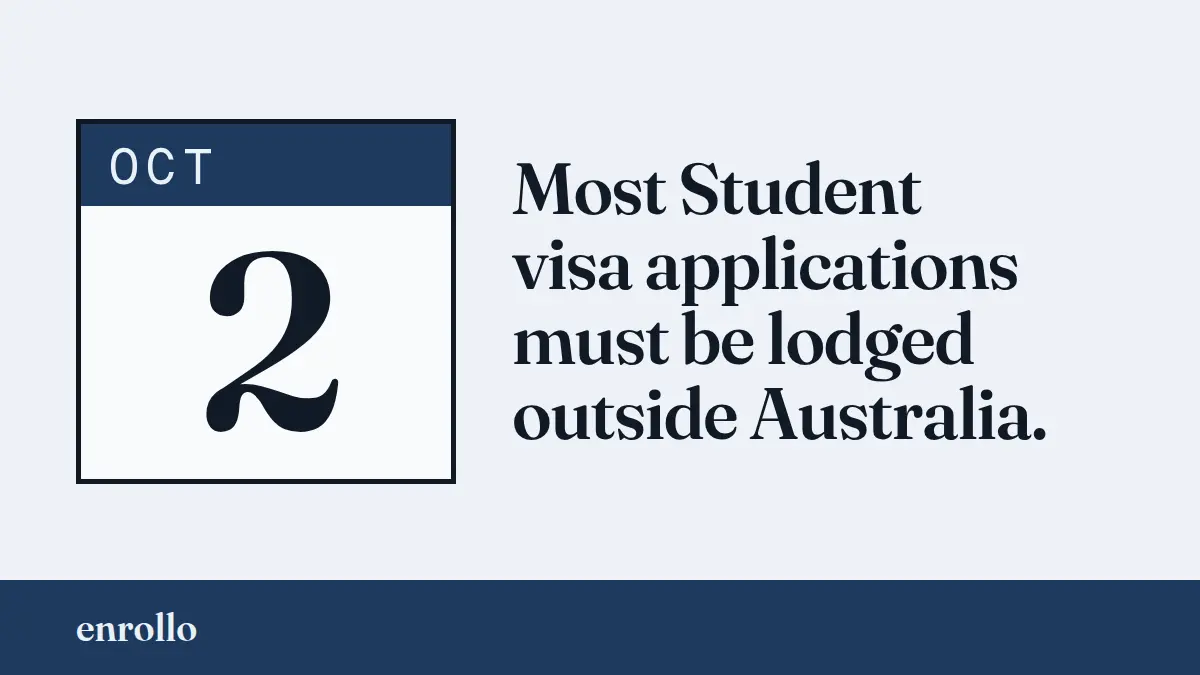
Australia's 2 October 2026 Student Visa Changes: What Education Agents Should Do Differently
From 2 October 2026, most people in Australia on a temporary visa can no longer lodge a Student visa there, and most applicants cannot include a partner or children. The six onshore exemptions, the family exemptions, a triage table and five checks for small agencies.

EducationLink Alternative for Boutique Education Agents
EducationLink’s own Pricing link opens Edvisor’s site. What the published numbers say for a 1–15 counsellor agency, where EducationLink is ahead of us, and where enrollo differs.

SmartX CRM Alternative for Boutique Education Agents
SmartX CRM publishes its prices, but three pages on its own site quote three different price shapes. An honest comparison for boutique agencies.
Ready to streamline your agency?
Track students, automate commissions, and never miss a deadline. Everything your study abroad agency needs in one place.
No credit card required